

Carrying Them Upward: A Memorial Day Meditation
Memorial Day arrives every year with flags planted along the medians, ceremonies at noon, and a moment of silence that always feels too short. The public gesture is real, and it matters—but underneath the gesture lives something more. We must remember those who gave their lives in service. That must remain first and centered. We’re here, breathing, still fighting, still resisting, still trying to become worthy of what was given, because someone walked toward something they couldn’t walk back from. The depth of that giving is the whole reason this day exists.
But Memorial Day also asks what we’ll do with the remembering. Will we let it land, or will we let it pass over us? Will we hold it long enough to feel the weight—and will we know how to come back up afterward? Because the work of remembering can feel like diving.
To say a name out loud after enough time has passed that the world expects you to be done with the pain of passing is to be willing to descend. To bring an absence back into the room, to bring someone who’s no longer here back if only in memory, is to descend. We go down into the water where the light grows long, and then longer, and then dim. We go down where the pressure begins to gather around the chest—and we’re right to go to these depths. The depth is where the truth of the loss still lives.
The widow and the widower go down there. The mother and the father, the brother, the sister. The child grown old enough now to understand what was taken before they were born must descend to understand. The town that buried its sons and daughters. The veteran who came back changed and still doesn’t have a name for what changed. The civilian who never wore the uniform but loved someone who did.
Anyone who lets the loss land becomes, on Memorial Day, a diver.
I’ve learned something in my own years near the bottom of those oceanic depths, and I want to say it gently, because I think it matters most to the ones who already know. We’re not meant to stay down there.
The diving is real, and it’s necessary, and there are seasons of grief and remembrance that ask us to go deeper than any of us would choose. But the deep is not where we were built to live. The psyche, like the body, needs sunlight. It needs warmth, and breath, and play, and embodiment, and the kind of laughter that surprises us out of ourselves. It needs a hand on the shoulder. It needs ordinary afternoons and unremarkable evenings and a porch that smells like rain. It needs the small, lit world that the ones we’re remembering gave their lives for us to keep.
Depth without resurfacing becomes pressure. And pressure has a way of lying to us. It tells us we’re uniquely alone, uniquely unknowable, uniquely cut off from the human community above. It tells us no one will understand if we come back up still carrying what we carried down below. It tells us the only way to honor who’s gone or what’s changed is to stay submerged.
I don’t believe that’s true. I don’t think the ones who gave their lives gave them, so we’d drown beside them in remembrance or sorrow. I think they gave them for the living—for the breath, the laughter, the babies in our arms, the porch lights, the slow Sunday mornings, the gardens, the small things that make a life worth living. To honor them is to carry their memory upward—not out of the depth, but with us through the depth and back to the surface, where the sun is, where the air is, where the people we love are still standing on the dock waiting for us to come back in.
I often write about water—the ocean, the current, the deep. This began long before I joined the Navy; in some ways, it’s the reason I chose the branch I did. I’m drawn to depth, but the gift of sensing and knowing the depth has a shadow. For anyone who feels deeply, that shadow is the temptation to stay below—to make a home on the ocean floor. To mistake heaviness for closeness, when in truth the spirit wants us to rise. It wants us to carry them with us into the lit places, and to let them inhabit the warmth, the breath, the laughter, the company—not only the candlelit corners.
This is the work the day quietly asks of all of us. Not only the grieving, though there’s grieving in it. It’s the work of integration. The work of holding the depth and the surface in the same body. The work of saying the names out loud and then turning back toward the table where the living are still waiting.
To remember is to descend. To honor is to bring them back up with us.
We carry them into our living. We carry them into our work. We carry them into the small inheritances of joy they helped make possible. We carry them upward into our laughter, because laughter is also a memorial. We carry them upward into our art, our caretaking, our voting, our naming of injustice, our refusal to abandon the people standing beside us when the world tells us to stand down.
And we don’t have to do any of this alone.
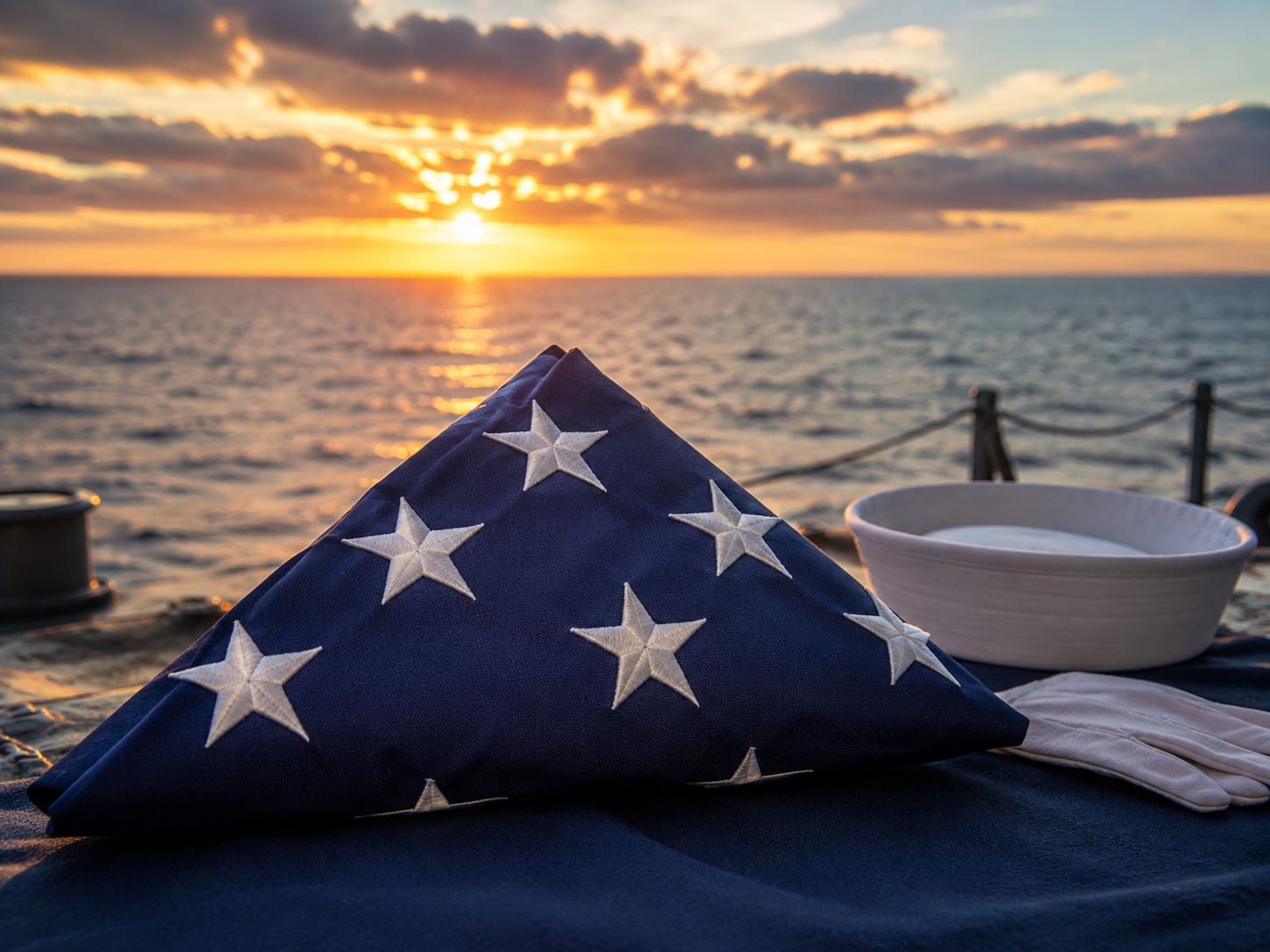
That is the part the heaviness most wants to hide from us. That we’re not the only ones doing the carrying. That somewhere down the road, someone else is also rising out of their own depths today and reaching a hand back toward the light. That somewhere across the country, someone else is folding a flag and saying a name.
The diving is solitary. The resurfacing does not have to be.
This Memorial Day, I’ll go down as deeply as the day asks me to and feel what’s there to be felt. And then I’ll come back up to let the sun find me. I’ll let the people I love find me and let the small, ordinary world that someone else’s giving made possible find me too.
That is how we honor them—not by staying under. No one carries the entire ocean alone. We surface together.
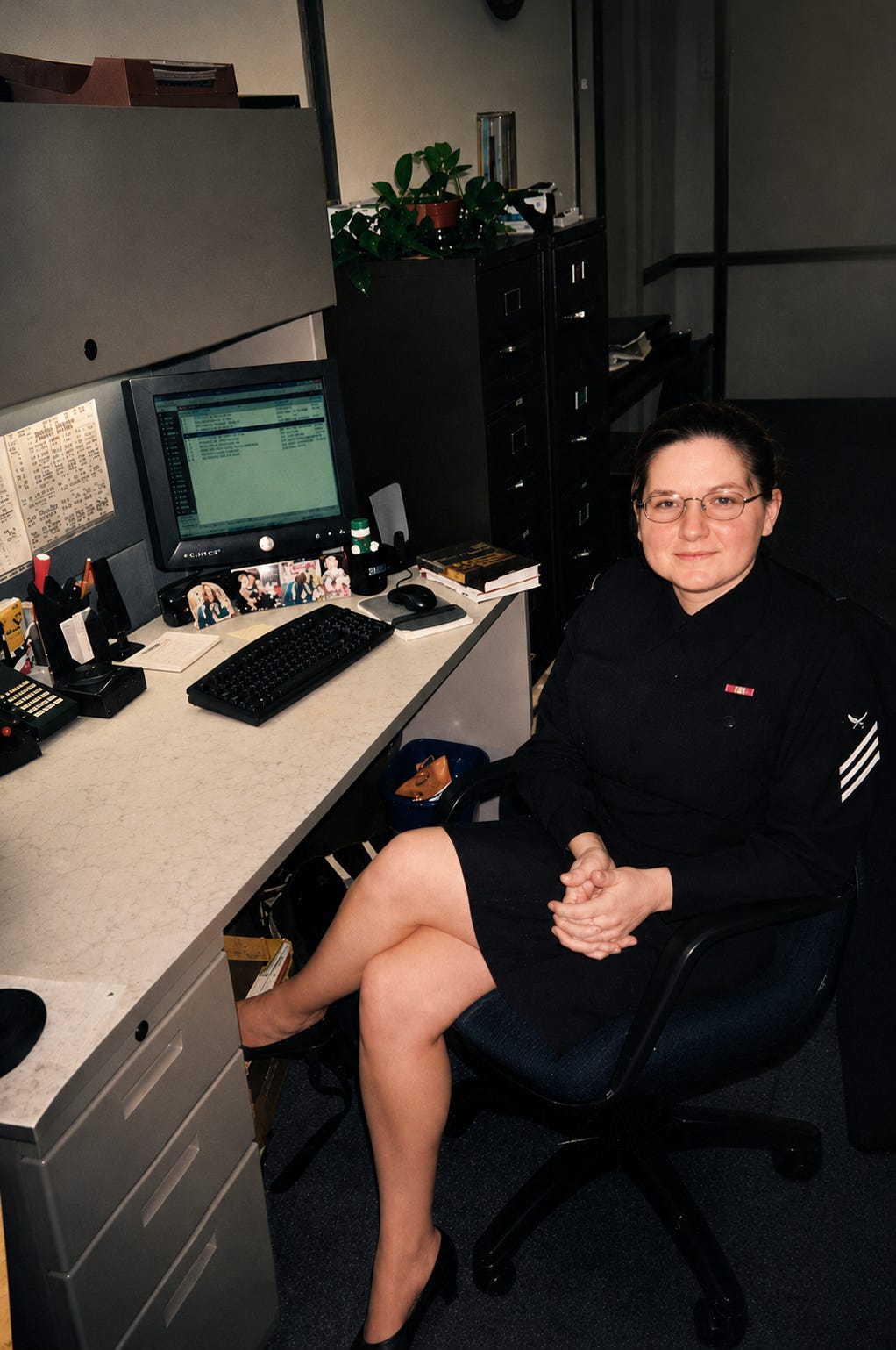
If you’re interested, please check out this short piece on my service published by the Office of Cultural Intelligence at SMU.
Thank you for your service. *sage nod*